

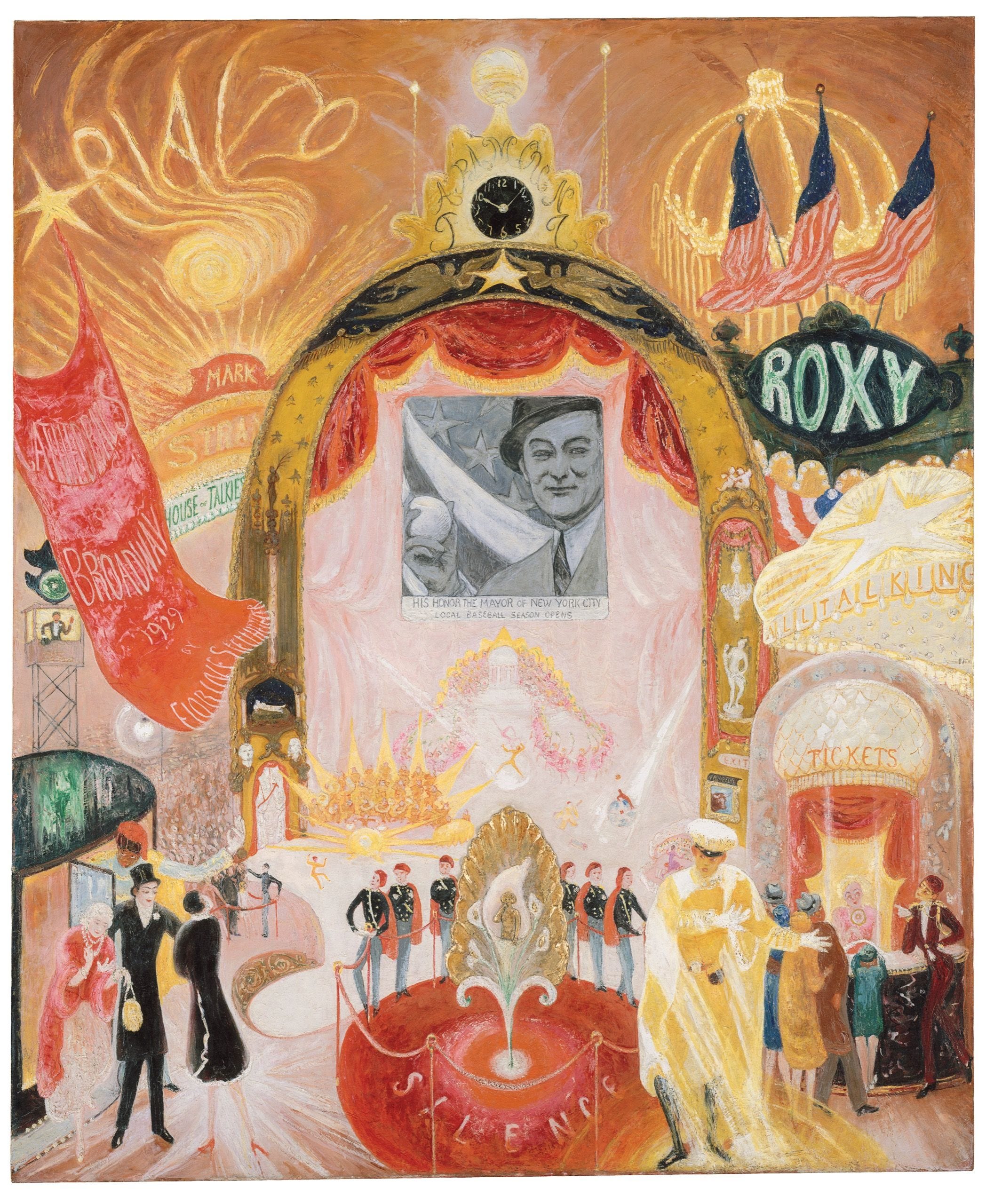
Turbulent, gorgeous, new york. Aromatic and pungent, slicked back hair, relaxed linen, hothouse of incubated dreams. On a warm spring night in May, I’d walk up and down Broome and Prince, across Crosby, up Broadway. Intimate conversations between strangers set against the backdrop of bodies, bodies sweating and bodies flickering with haste and distraction. Cafe Select at midnight on Wednesday, cutting across the wide boulevard to Ray’s with its distinct sheen of maroon red and suede backed chairs.
How would you tell a story about this place? Someone asks me, gesturing widely to the skyline dwindling at dusk. The unforgiving urban spectacle of apartment blocks and wide avenues spilling over with heaping black trash bags, the stench of smoke, metal, and sticky floors, and the strong sweetness of spring lilac. The collapse of dignity and the unbothered bystander. Yet, forever, a specific heat signature of magic and desire. The expressways and the cityline backlit against the hudson river, the walkups and sprawling sidewalk restaurants, the skyscrapers and halal carts. People sitting on the stoop reading paperbacks, arguing, smoking, wrapped in private embrace so fierce you have to look away. On the E train I stared at people pressed tightly against each other. The insurance salesperson and lawyers and bankers in their collared shirts, and the stained jeans of artists and students and tourists. United by nothing other than the sheer hunger of being in new york city, desire flooding into every artery. We’re all puppets to desire. You’d be flung around like collateral damage then yanked out of its depths — a makeshift baptism, unwittingly remade.
The world will not ask you if you are ready to be changed. The story goes like this for every single good thing that has ever happened to me: I spent far too long paralyzed because I was waiting for ‘readiness,’ then my hand was ultimately forced. I wished to forecast the future, as if it were standardized and contrived. This held me back from making frequent collisions with reality. In short, I’ve been trying to be braver. Do it scared, do it nervous, do it despite the potential of failure.
Perhaps this explains my sentimentality over new york. It throws you into uncomfortable proximity to hope and determination. A raw, dense, kind of hope that disregards individual resistance or hesitation. Witnessing it gives you more personal affordances for courage. You’re given permission to be fully alone, expressionistic. At the same time, you’re reminded constantly that control is futile in small ways. Delays on subways, sordid, muffled heat, the anguish from being skin-contact with uncertainty. All this is accompanied by the loveliness of not knowing exactly how something can and will transform you. The city is sweeping and grand, yet deeply private and intimate. On any given day you can walk around new york with nowhere specific to go, no particular room or party to stay at too long — no one guesses your head is full of such shining, perishable, dreams. You are just another stranger crossing the street on a bright, unending, spring afternoon.
I hope you enjoyed the first of a mini set of small vignettes of places I’m transiting through in May. New York, London, and Turkey.
Here’s a quote by E.B White I always return to. To me it captures the very essence of New York:
There are roughly three New Yorks. There is, first, the New York of the man or woman who was born here, who takes the city for granted and accepts its size and its turbulence as natural and inevitable. Second, there is the New York of the commuter — the city that is devoured by locusts each day. and spat out each night. Third, there is the New York of the person who was born somewhere else and came to New York in quest of something. Of these three trembling cities the greatest is the last —
The city of final destination, the city that is a goal. It is this third city that accounts for New York’s highstrung disposition, its poetical deportment, its dedication to the arts, and its incomparable achievements. Commuters give the city its tidal restlessness; natives give it solidity and continuity; but the settlers give it passion.
My conversation with Jackson on Dialectic

Sharing the interview I did with my friend Jackson on Dialectic. Jackson and I have had many wide-ranging conversations, I hope it’s fun to tune in to one of them.
Some things we discussed over the 2 hours:
The dual pronged pursuit of craft: intensity and rigor, while retaining an essential playfulness and lightness, joie de vivre.
Expanding an individual’s personal locus of possibility. I’m interested in small granular changes on a more incremental scale - like improving your friendships or relationship with practice/effort. I’m very passionate about this idea that we can access increasing levels of agency within ourselves when we absorb stories that move us, kick up new sensations, and dare to be slightly more brave every day.
The texture of reality and fantasy as it applies to relationships, romantic and platonic. Including creative partnerships like Joan Didion and her husband John, C.S Lewis and JRR Tolkein.


Sharing one part I enjoyed speaking about the duality of intensity/seriousness and reality, edited slightly for brevity. You might also like the sections on the intimacy of ideas in relationships + creative partnerships toward the end of the podcast.
Jackson:
What you just said has this lightness and almost zen-like quality of being loose and egoless. Yet you are a person who writes about intensity, deep effort, and seriousness.
You say beauty is effort; that effort is monstrous and ugly, but it also is the source of everything beautiful in this world. Somewhere else you wrote that in writing and in life, you need to “gnaw on the bone.” This goes back to the reality thing: get under the skin and into the crevices. You’ve said writing has become bloodless and fake, but people crave the real. Am I making up this tension?
Nicole
No, there’s definitely a tension.
Jackson:
People who don’t know you very well would think you are very vibes-based. In some sense, you have a creative life in writing that is probably a little bit more that way. Then you have a professional life as an investor that’s much harder. Those two things seem so at odds.
It does seem that both aspects for you—the playfulness and lightness and the intensity—are about loving what is real. They're different cuts on that, but both are in service of that.
Nicole:
I have multiple identities. The reason they feel at odds is because sometimes those identities conflict or come into friction with one another. I don’t know if you’ve read the short story “Borges and I” by Jorge Luis Borges, the Argentinian writer. I think you would really like his short stories.
It’s about him having a distinct writer self and ordinary self. Who wins?
There are also a bunch of books by the German author Hermann Hesse that I love, and all his books are about duality. If you’ve read any of them, like Siddhartha or The Glass Bead Game, Narcissus and Goldmund is probably the most relevant here. It’s about two monks. One is very ascetic, lives in the tower, and becomes an intellectual and professor. The other is a man of the world who goes into the world and engages in acts of sensuality and violence and all of these raw things.
At the end of the novel, they come back together and have a conversation. When I read that novel, I thought, “This is us. This is everyone. This is me.” There’s one part of you that’s in the tower and one part of you in the world, and you’re constantly vacillating between the two. He doesn’t pass any judgment. It’s not like one is better than the other, but each is its own integral nature. You have to fulfill your integral nature.
Jackson
You wrote that when you meet someone with devotion and care for their craft, they have thinner barriers between their soul and the external world. Their soul shines lightly on the surface of their being. That duality is there again. It's a surprising description of a very serious person.
Nicole
Maybe my thesis is that it is through seriousness that you find playfulness. It’s through seriousness that you can skate lightly through the world.
I write about Miyazaki a lot and he’s a great inspiration to me. He hand-drew his frames until well into his 70s when CGI was available. He is constitutionally unable to not care, and that is what makes his films so light and beautiful.
When you watch a Miyazaki film, there are children who have to grow up too early, wars, famines, fires, and lost families. But at the end of the movie, you come away feeling like that was a beautiful, playful, light expression of art. There can be both. There always is both.
—
Here’s his post on it below, and the full podcast transcript and links - Dialectic / Apple / Spotify
Thanks again Jackson Dahl for having me!


I’d also recommend the episodes Jackson has done with Henrik Karlsson, Celine Nguyen, Tamara Winter, and Nabeel S. Qureshi. All can be found on Dialectic.fm.
Had to write down four, five of these lines. Wholly transcribable.