

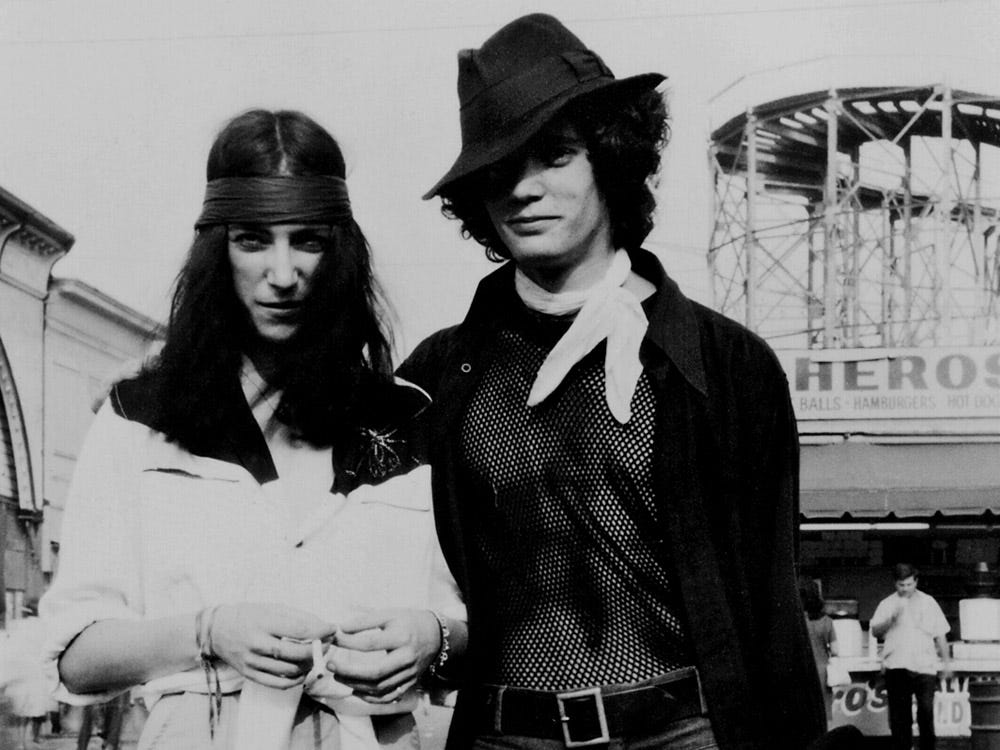
just kids: patti smith and robert mapplethorpe
It is no question that we are the amalgamation of everyone we have ever loved. It is no question that every word we write is tinged by knowledge that has been derived by others, co-opted and made our own. This is art: a live wire plugged into the current of all our central experiences.
“We gravitated toward each other, no matter how wide the breach” Patti Smith, acclaimed poet, artist, and songwriter, writes in her memoir Just Kids, about her unique, mutually devotional, friendship with Robert Mapplethorpe, renowned photographer. Both met as young, aspiring artists — hungry and terribly broke. Patti started as a poet. Robert was out of Pratt, working in painting, sculpture and collage.
To call the nature of their relationship merely romantic or platonic would be inaccurate, or at least too shallow of a label. Rather, as she would put it, they were “irrevocably entwined.” Orbiting each other for over two decades, much of their work has inklings or embeddings of one another in it.
Like Paul and Elisabeth, the sister and brother in Cocteau’s Les Enfants Terribles. We played similar games, declared the most obscure object treasure, and often puzzled friends and acquaintances by our indefinable devotion.
Patti Smith arrived in New York in the spring of 1967, dropped off at the bus terminal with a copy of illustrations by Rimbaud. She properly met Robert Mapplethorpe while she worked as a cashier in the uptown branch of Brentano’s bookstore. He was all at once bashful and mischievous, feminine and masculine, alluring and hard edged.
After spending only one day and early morning roaming the streets in New York, they immediately started living together. To decorate their first shared real home, 160 James Place, they “scavenged the streets” on furnishing the place from treasures from trash night, from a discarded mattress in the lamplight to “images of Jesus and the Madonna in ornate crumbling frames.”
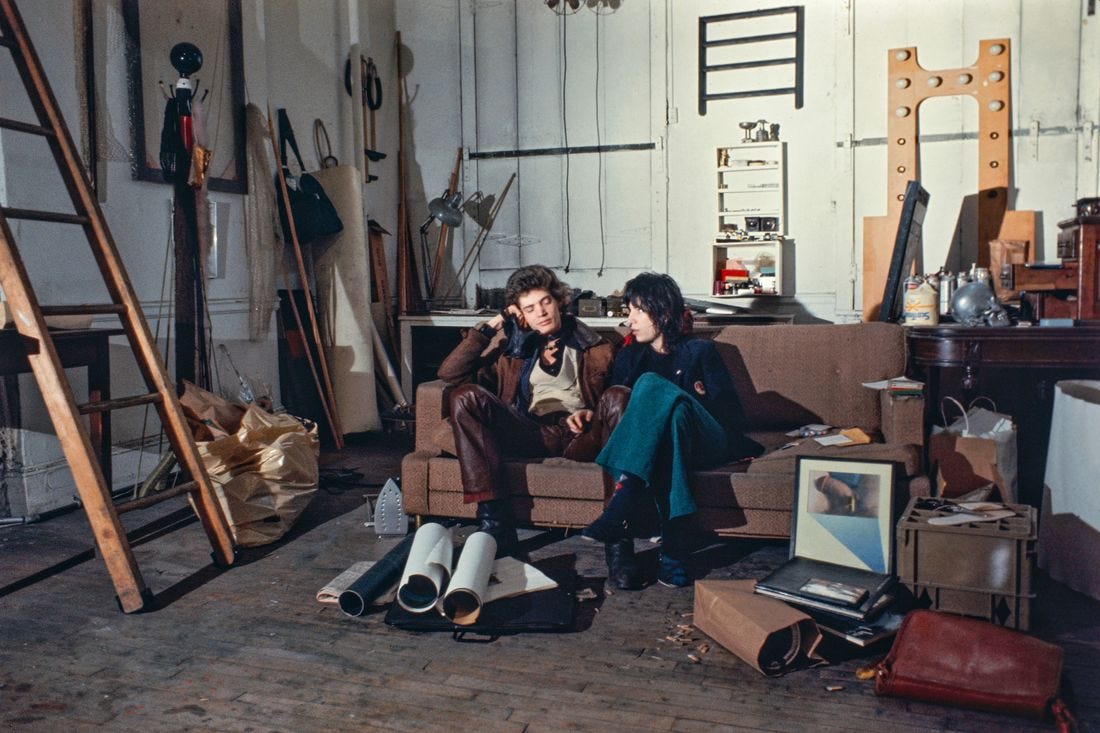
They couldn’t afford any new records, so they listened to the same ones over and over. In her words, they “mutually surrendered” their lonelinesses.
One integral part of their relationship was observing New York through a mutual eye, sitting in Washington Square watching the tourists and revolutionaries distributing antiwar leaflets, walking down Myrtle avenue to get a marshmallow treat, at the Bowery hunting for tattered silk dresses, frayed cashmere overcoats, and used motorcycle jackets. They could only afford one ticket at art museums, so only one person would go in and report back to the other all the things they saw.
I picture them in their apartment: all of William Blake’s books and pictures of Rimbaud and colored pencils, hues of rose, cadmium, and moss. Their quills and talismans littering the desks and couches. Sometimes Smith would wake up to see Mapplethorpe “working in the dim light of votive candles,” examining his work from every angle, pensive and preoccupied.
Importantly, they’d often make art in parallel:
One cannot imagine the mutual happiness we felt when we sat and drew together. We would get lost for hours. His ability to concentrate for long periods infected me, and I learned by his example, working side by side.

The pair moved into the Chelsea Hotel in the 1970s, and their creative lives blossomed and molted. Mapplethorpe started devoting himself photography as his main medium, and Smith started integrating music into her poetry and performing — punk-rock poems accompanied by an electric guitar backdrop that reverberated through St Mark’s church on performance evenings.
For years on end, they were each other’s main source of encouragement. Other times, friction was borne out of love and care.
He (Mapplethorpe) was worried that I wouldn’t be successful if my work was too provocative. He always wanted me to write a song he could dance to…. but I had no interest, and I was always too crude.
As the years went by, their initial romantic partnership dwindled and ended, though they remained devoted to each other. Their connection spanned cities and over 40 years, from San Francisco to New York to Detroit. Patti married Fred Smith and had children, but still visited and sent letters. In 1989, Mapplethorpe passed away. One of his last asks for Smith was to tell their story.
A story about how love changes, and grows over time. A story of two poor kids cobbling a life and creating art together, believing in one another and helping each other become more expansive, more themselves. The highest task of a bond between two people, as poet Rainer Maria Rilke wrote, is that each should stand guard over the solitude of the other. I see that in Smith and Mapplethorpe’s story - they were the center of one another’s consciousnesses. Perhaps they drifted from each other over the span of years, but always found themselves drawn back that odd combination of fate and will.
Shortly after he had been diagnosed, Mapplethorpe, excited to show Smith his new work, stood before a frame that had just come in, inside of his new loft in an Art Deco building on Twenty-third Street.
“It’s genius, isn’t it?” he said. The tone of his voice, the familiarity of the words of that particular exchange, took my breath away.
“Yes, it’s genius.”
This exchange is all there is. Seeing the vantage point of the world side by side with another, loving each other through it all.
interwoven lives: peter hujar and paul thek and the artists of new york
Elsewhere in New York in the 1960s, Paul Thek and Peter Hujar were friends and lovers. They were beloved by legends in the literary and art world: Susan Sontag and Fran Lebowitz, Cy Twombly, and Andy Warhol, considered geniuses to their friends before the world caught on. Together, they bounced around bars in Greenwich Village, like San Remo’s Cafe — smoky, dark, joints packed with musical tastemakers — folk musicians, jazz songwriters, students, where the city’s creative heart thrummed.
Over two decades of their interwoven lives, Thek became a critically acclaimed artist and Hujar a commercial photographer, who, according to AnOther magazine, took many of the portraits that would cement his status in the canon of 20th-century photography.
Peter was meticulous, proud. His camera “reached into you,” and “rummaged around for parts of you that you might not have realized were there.” Paul was theatrical, capable of self mythologizing, tormented and romantic. They orbited one another, and all their artistic leaps across the decades were indirectly or directly inspired by one another.
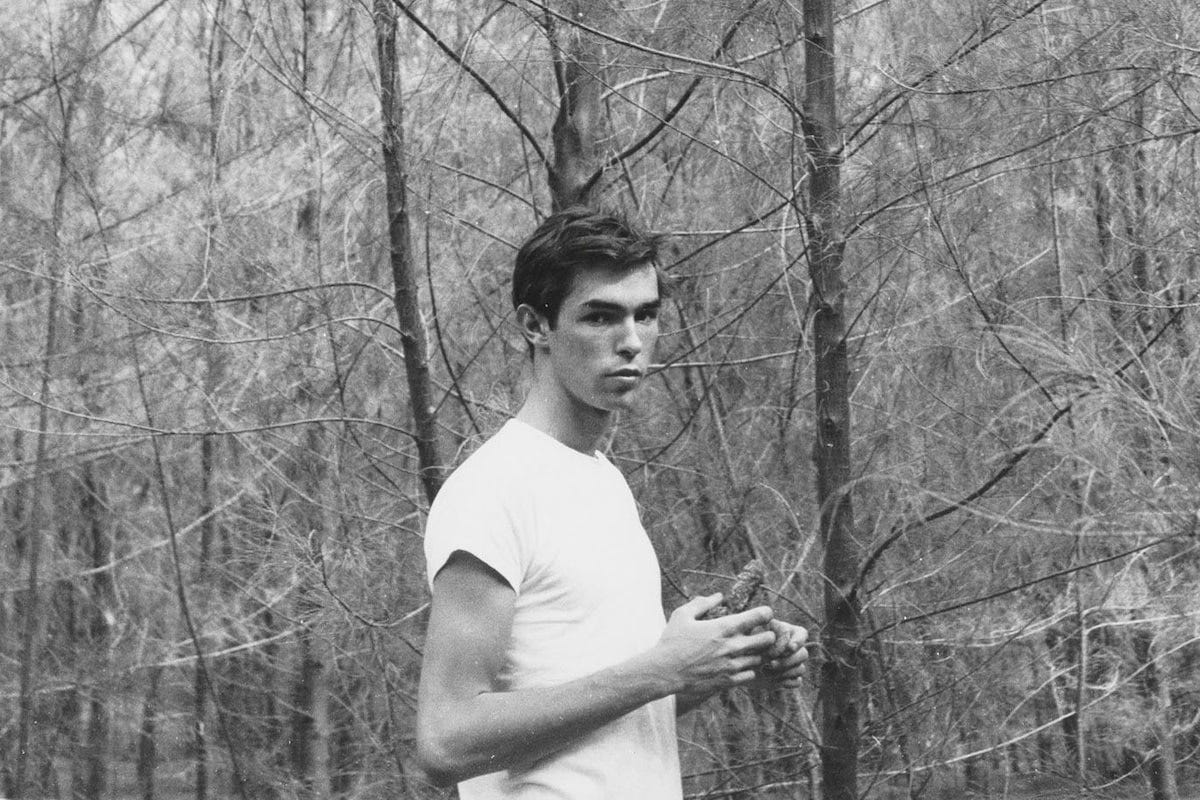
Andrew Durbin’s fantastic new double biography, The Wonderful World That Almost Was, describes the pair’s undeniable dance and intellectual connection. Here’s what Durbin describes, observing at all the contact sheets and photos Hujar took of Thek:
When you look at the contact sheets and prints of Paul in Oakleyville, you feel you have caught sight of something private, nameless.
What to call it? You might just call it love, only it is a love that had experienced so many transformations it eluded neat description; its true shape was known only to them.
They dealt with similar motifs in their work, drawn from their travels to Palermo’s catacombs — which, for Hujar, became a series of stark black-and-white photographs later collected in Portraits in Life and Death, and for Thek, became the basis for his bodily sculptures. In their letters to one another, you can palpably sense their reaching toward, attempting to bridge the gap between private individual worlds, and a shared communal one.
Here’s Paul to Peter in a letter:
Usually I do not understand you for at least 6 months. I will try to be better synchronized.
Beyond just a story between two people, I took Durbin’s depiction as example of the dense networks of multiple artists, admirers and friends and co-conspirators that formed in the nucleus of New York in the 1960s and 70s. This particular furnace was created in the suspension between the gritty reality of war and poverty and the ethereal hope of art and beauty. Here, you could wring and forge beauty out of raw material, that beauty could set you free.
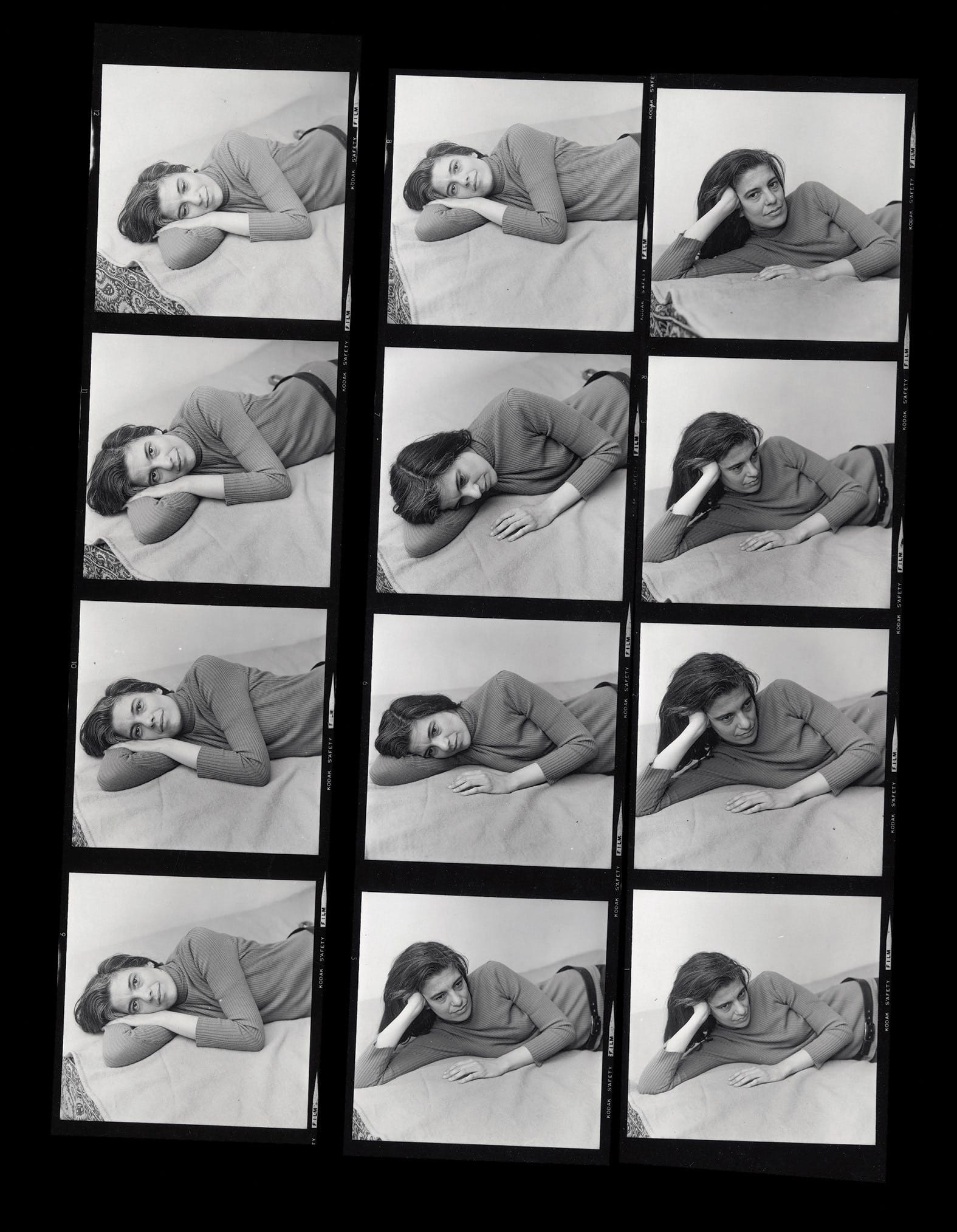
Susan Sontag, in particular, saw in Paul and Peter a sensuous fervor to life. They called her a “teacher sister,” and were the inspiration to the title of her famous essay collection Against Interpretation. She admired raw, unassailable talent and energy — in her notebooks, people who burn. Paul and Peter burned, in this way.

no man an island: intellectual and creative partnerships

When I write about creative partnerships, I am really writing about the larger story of two people being irrevocably changed by one another.
This doesn’t mean that a relationship is perfect, or that it even lasts frozen in its original, untarnished and pure state. Often, there are complications with unbearable closeness. Thek and Hujar, despite stark intimacy at one point in time, eventually became strangers. Other times, a connection lasts beyond mortality. Smith’s gorgeous tribute book to Mapplethorpe is an example of how love can continue beyond death, beyond time.
These experiences can be light and easy, or terribly complicated. You can feel one thing in stasis and then experience the enduring impact of it only years later. In it takes two to think I wrote about how having just one good interlocutor by your side can reconfigure reality. Much of this is just having one person who really believes in you and understands the context (and limitations) that you are operating in.
I am shaping your thoughts as much as you are shaping mine. It is a great responsibility to be able to alter someone’s internal model of reality in their brain. It is also a great pleasure to perpetually forge new ideas through a collaborative design process.
It really does take two to think. We should be so lucky to find just one other person to think with and talk to.
What happens when you find such a person? I don’t have to speculate too much. When I first met you, it was like the dial for saturation in my brain turned up. I was afflicted by growing pains. I think you re-arranged my brain, gave me different thoughts. You made me look again at something that seemed so plain, so mundane. All of a sudden, I was struck by its profundity, its vibrancy. You provided me the vantage point from which you saw the rest of the world, of what was possible, and within my reach. In short, you made me more brave.
Thanks for reading,
Nix.
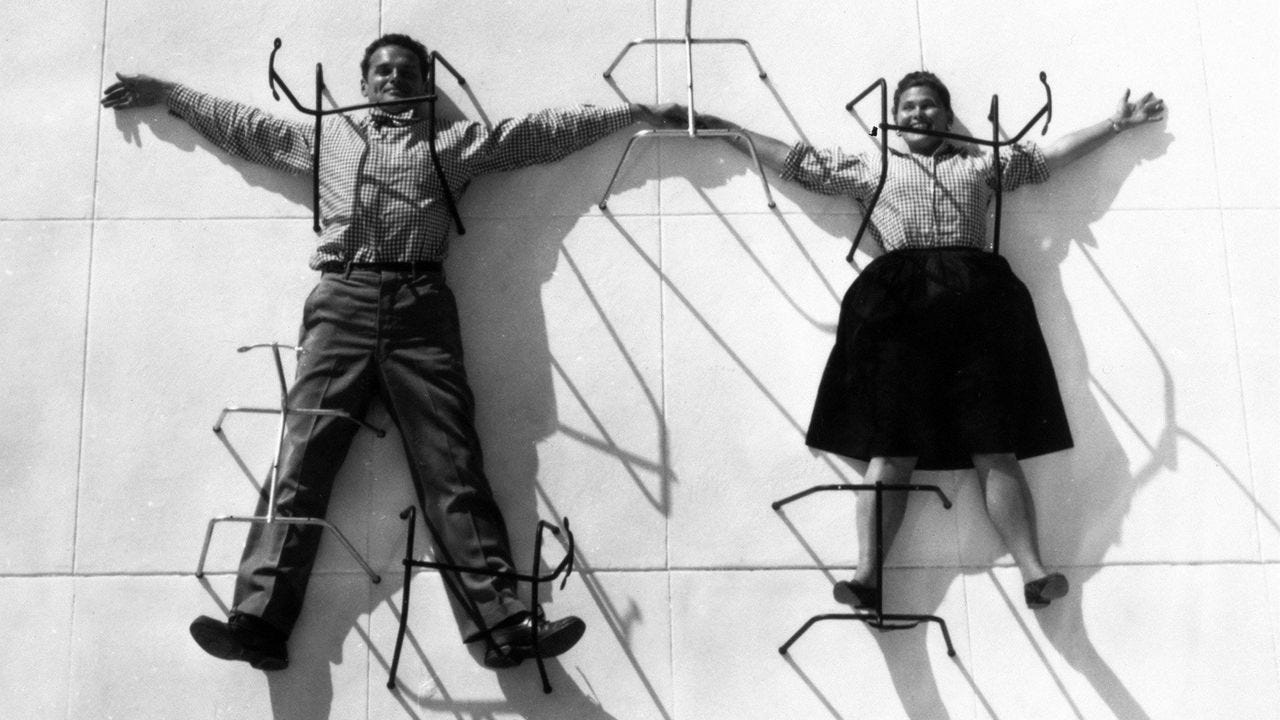
Other creative partnerships I admire and want to write about: Robert and Ina Caro, Joan Didion and John Gregory Dunne, and Charles and Ray Eames, Elton John and Bernie Taupin.
I love sitting in my room and listening to my fiance type while I do too. We create a symphony of clacking keys and then emerge to tell share our highs and lows of writing life together. Doing it together is a gift. And these are all wonderful examples of that.
nicole loved this! you missed a very important pair yoko ono and john lennon!