

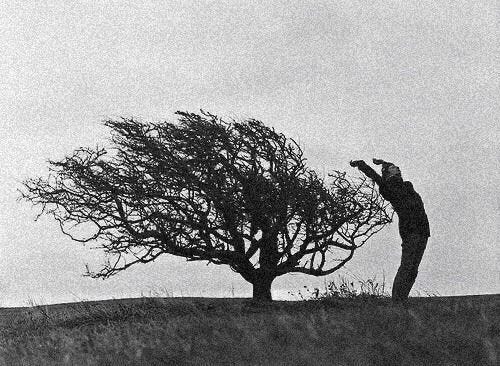
The pursuit of beauty can rearrange a life.
Last year I spent a few weeks in Seoul, South Korea. My friends and I colloquially called it the ‘Silicon Valley of Beauty.’ It was, in fact, a lot of fun! I participated. I did the color analysis, I bought a set list of products: the Amuse blush, Entropy tulle gloss, Rejuran cream.
Only later I’d reflect on the sheer inescapability of longing for beauty. Most women I know grew up haunted by the beauty myth, torn between acceptance and aspiration. All my life I saw beauty as a form of applied effort. Beauty was rarely a quality one owned intrinsically, rather, something one maniacally expended money and time to become.
I wondered how much time I spent worshipping false gods. I wondered when I finally grew up. When I decided my body was my body, and I loved it because it was mine.
It seems to me there are two predominant types of beauty. A beauty that is solipsistic, oriented around glamor and draws us inward in an ever turning gyre — and a beauty that lies outside of us, that makes us more generous and open. The kind we see in a plant or a sky or a work of art or music, or perhaps inside the very kernel of the human soul.
The second type is what inspires us to live, a type of beauty we can never betray.
Beauty as a method of attention
I was delighted to encounter the framing of beauty as a method of attention from the Irish-British moral philosopher and novelist Iris Murdoch.
According to Murdoch in her set of essays The Sovereignty of Good, beauty is primarily an agent of change. Beauty draws our attention outward, away from ourselves. It is an occasion for ‘unselfing’: an experience of having our normal self‑preoccupation fall away in the presence of something beautiful. This quality of unselfish attention is the highest form of grace.
Through this redirection of attention, we learn how to see. In other words, Murdoch saw beauty as a technology. A practice, a technique, for altering the world or the experience of the world.
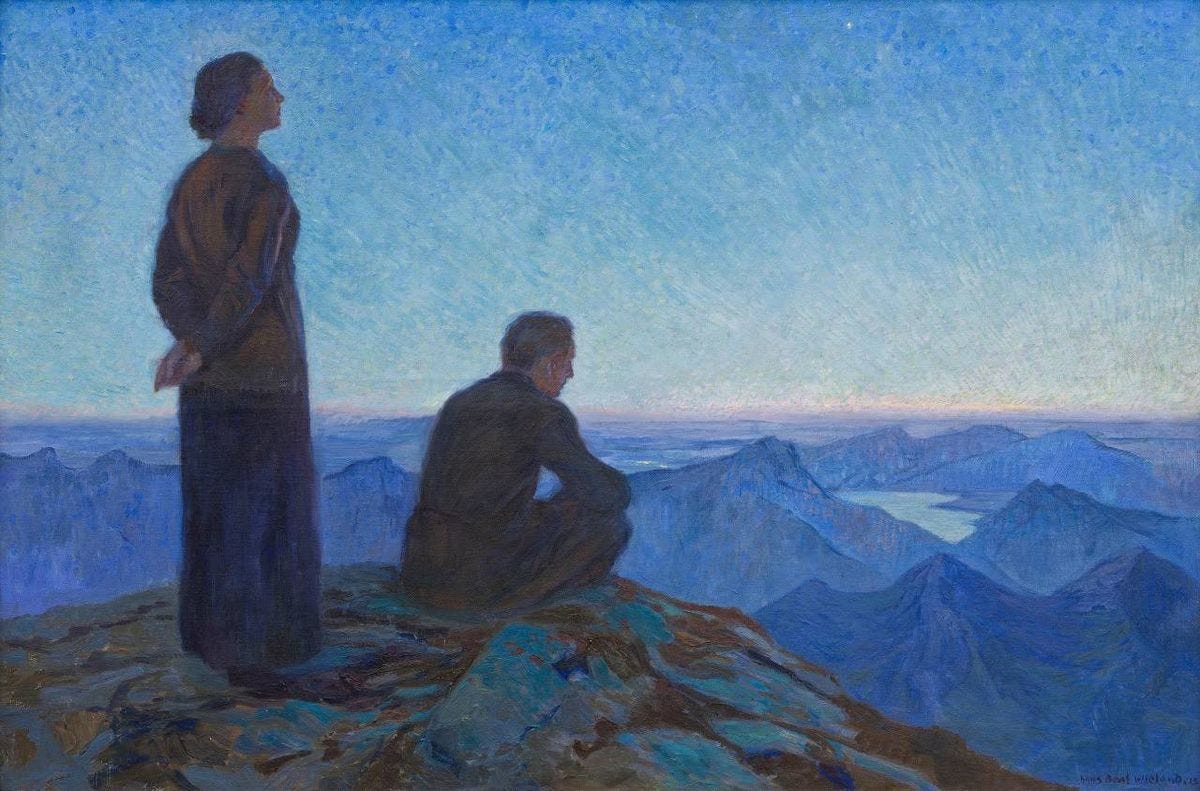
Easy and Difficult Beauty
If beauty is a method of attention, what happens when that attention requires us to sit with discomfort, complexity, or even pain? Chloe Cooper Jones asks this question in Easy Beauty, a memoir about living and becoming a mother with sacral agenesis, a condition affecting the spine.
Of course, her memoir touches on her experience sitting outside the purview of society’s standard of beauty. Yet her definition of beauty is far more expansive — beyond bodily beauty, the pleasure that comes from art, music, ideas. Crucially: there is a type of beauty, often dismissed, that can transform us in ways we don’t expect.
In an interview on the Ezra Klein show, Cooper Jones describes easy and difficult beauty, referencing the English philosopher Bernard Bosanquet. Easy beauty is the type of beauty that becomes very apparent to us once we sense it. For example:
A simple spatial rhythm. A song comes on and you immediately want to dance or you immediately feel a reaction to it. Looking at a sunset, looking at a rose, looking at — or eating a beautiful meal.
Conversely, difficult beauty is often a beauty that challenges us, that can initially be jarring or hard to accept. It can be off-putting because it is complex, creates a dissonance within us.
Difficult beauty, wrote Bosanquet,
Required more time, patience, and a higher amount of concentration. Our ability to appreciate difficult beauty depended on our education, insight, endurance, and our capacity for attention.
Learning to enjoy new music is a good metaphor. Nietzsche writes, upon first hearing a strange melody it takes some time to become accustomed to it: “we need to exercise effort and good-will in order to endure it in spite of its strangeness.”
Then comes the moment when a switch flips. We become “humble and enraptured lovers, who want it and want it again, and ask for nothing better from the world.”
We are… finally recompensed for our good-will, our patience, reasonableness and gentleness towards what is unfamiliar, by the unfamiliar slowly throwing off its veil and presenting itself to us as a new, ineffable beauty.
Perhaps developing a taste for difficult beauty, or the ability to tolerate mental discomfort is one of the most important human skills to have. To consume novel things, to accept boredom and sadness, to be patient, to override the aversion of being changed. To live our normal lives and see it as both banal and sublime, and godly and mundane, and find the immense beauty somewhere in the crevices.
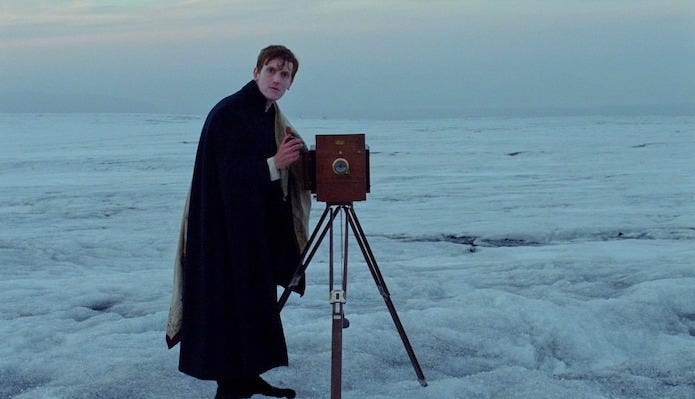
The Beautiful is Necessarily Real
Fake things continue to proliferate. Fake writing, fake pictures. But does this form of beauty touch us? Do we revise the course of our lives to put ourselves in its path?
In tech circles, we discuss AI slop and a defense against it. Comms maverick for startups Lulu Cheng Meservey, Founder of Rostra, writes that “narrative alpha” now comes only by doing real things. Creating real and durable products that exhibit craftsmanship and taste. Showing up as a real human “with real flaws and foibles” distinguished from AI-curated personas and scripts.
True resonance arises from the feeling that what you are seeing is real, that it was forged through a complicated interconnectedness and friction with the world. Ironically, the apex of absolute beauty or symmetry or pleasantness lacks real intimacy. It’s flat. You could look at a doll and feel nothing but the uncanny. But look at a face you love for all its quirks and think it inimitably beautiful.
I keep returning to this one line in Jon Repetti’s piece Yet Byron Never Made Tea as You Do about his marriage with his wife Jane. He writes that it is precisely the contact with reality, the eruptions of the real into the fantasy that makes up the real substance of love:
Love begins not with me, but with the other, with the little eruption of the Real that I experience in the other.
In his wife, it was the first time she laughs a full bodied laugh and he gets a glimpse of a chip in her front tooth.
I learned later how she got that chip, how it came to function as a synecdoche for some of the darkest part of her life, why she tried so hard to hide it. But in that moment, and all the moments after (even after I learned its story), I loved that chipped tooth and I loved her for it.
Repetti describes what I believe we all crave, an intense attention that doesn’t shirk away. Secretly, we want to be loved for the stuff of reality, not the veneer of perfection, not for what we can do. We don’t want to be a portal through which the rest of the world is beheld, we want to be seen for who we are.
I end on this scene in the children’s story Velveteen Rabbit - where an old stuffed animal, the Skin Horse, speaks to a newer toy, a rabbit. “Real isn’t how you are made,” he says, “It’s a thing that happens to you.”
“When a child loves you for a long, long time, not just to play with, but REALLY loves you, then you become Real.”
…
“It doesn’t happen all at once,” said the Skin Horse. “You become. It takes a long time. That’s why it doesn’t happen often to people who break easily, or have sharp edges, or who have to be carefully kept. Generally, by the time you are Real, most of your hair has been loved off, and your eyes drop out and you get loose in the joints and very shabby. But these things don’t matter at all, because once you are Real you can’t be ugly, except to people who don’t understand.”
By the end of the book, the rabbit is shabby and threadbare. But through a boy’s love, made Real.
The trip to Seoul was with my mother, my grandmother, and my aunt. One evening, we went to a restaurant on the 3rd floor of a building overlooking a busy intersection. It was open air, you could hear the entire street rushing in at night. The buskers and traffic and chatter drifting in and out. That night, a violinist was playing right under the window. We ate kimchi pancake and tteokbokki, drank jujube tea and a Terra beer. The busker played korean ballads and then strangely, Les Champs-Elysées, the French-American rendition from 1969.
The entirety of last year was riddled with uncertainty, full of doubt. What should I be doing? How should I live? All this fell aside in that moment. I remember it as one of complete unselfing. In that moment I was completely present. I didn’t think of what to do or what to buy or how to be. I was so happy. I was loved. I was there.
I don’t have an answer on how to pacify the insatiable hunger for beauty. Only a reminder that moments I felt most beautiful were never about the pristine makeup, or the perfect figure or outfit. Rather, the aliveness or electricity I felt within, as if I were pursuing my true techne, or craft, upon the earth. And every time I found someone truly beautiful to behold, it was because their soul shone lightly on the surface of their being.
As a child, your simplistic conception of beauty is limited. As your experiences diversify and broaden, your ability to recognize beauty grows larger and deeper. This includes the beauty you glimpse within yourself.
We left the restaurant and slowly walked home. The air was thick and pale with the gloss of stars and the beginnings of snow. The floating music lingered, gentle on my mind.
There are no more fantasies to cling onto. There is no past, no backward place for my longings. Only forward into the night, led by the beacon of beauty.

You might like a few other posts on attunement to self and other:


I think this is my favorite piece of writing of yours. This is one of those rare essays I wish were longer because I want to sustain this feeling of attention.
oh my god, i loved this. i read each paragraph twice.