

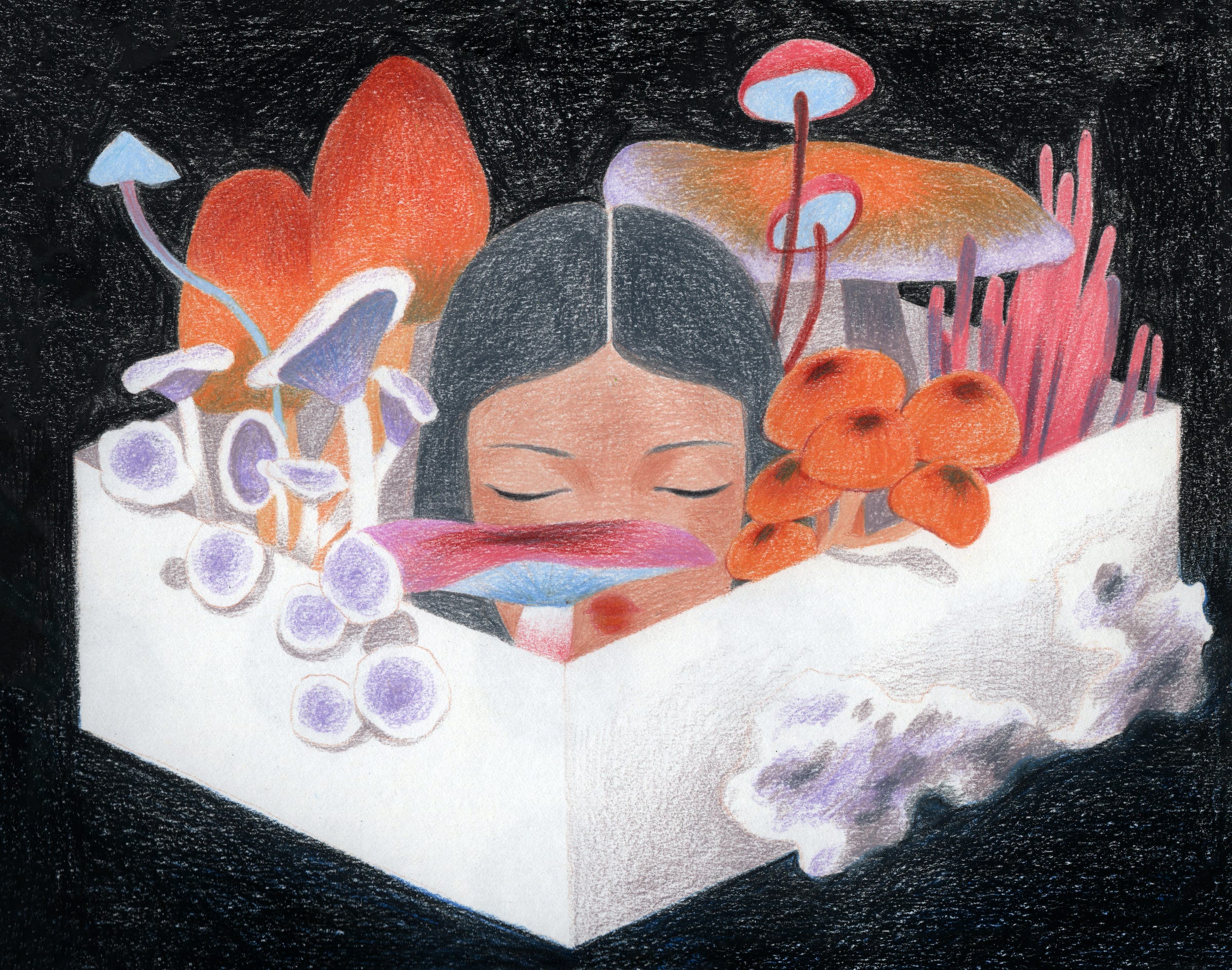
in the warm New York 4 o’clock light we are drifting back and forth /
between each other like a tree breathing through its spectacles /I look / at you and I would rather look at you than all the portraits in the world
(Having a Coke with You by Frank O’ Hara)
Writing as ordinary magic
The Lunch Poems (1950-60s) were a series of poems written on Frank O’Hara’s lunch breaks while he worked at the Museum of Modern Art curating exhibitions. O’Hara’s distinct un-fussy contemporary style broke poetic ground in stark contrast to the more conservative academic poetry of the 1960s. Long time book critic of the New York Times, Dwight Garner, called it “the little black dress of American poetry books, redolent of cocktails and cigarettes and theater tickets and phonograph records.”
The best way I’d describe the poems is the compression of ordinary magic found in ordinary people. O’Hara walked the streets of New York City and captured the faces and expressions of the working class: the tobacconist in the Ziegfeld Theatre, the secretaries gossiping in the news-stands. The dwindling edges of the Seagram building at dusk, dancers with their leotards and ballet shoes and crisp beer at the delicatessen, and dark plumes of cigarette smoke. Reading the poems stirs up fond memories of taking the Megabus for $10 at 6am from the Philadelphia bus terminal, shivering in the cold. There are still few prettier places than New York in April at the turn of spring.
O’Hara is not the only artist or writer I admire who had a day job and a fruitful creative life.
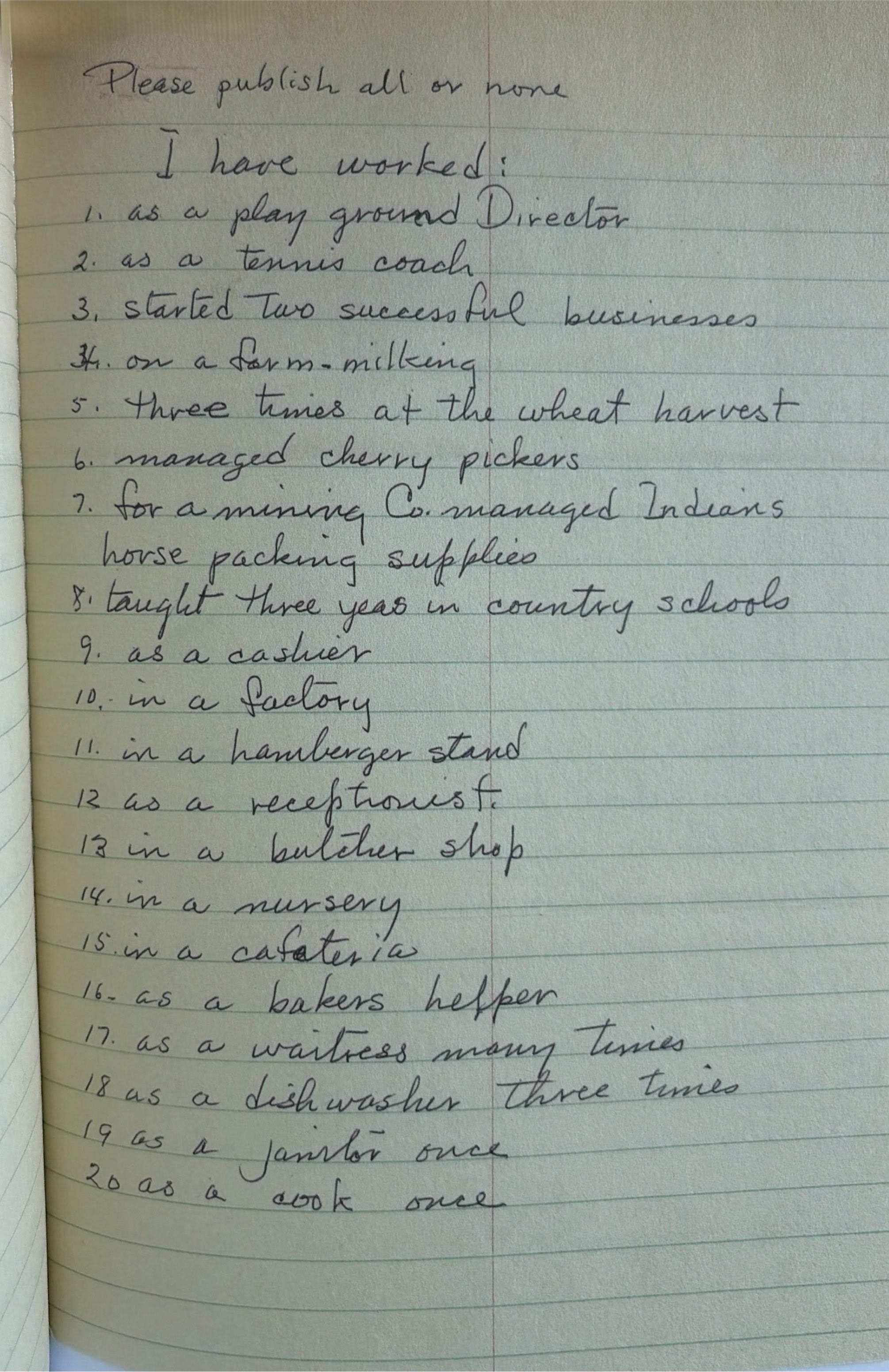
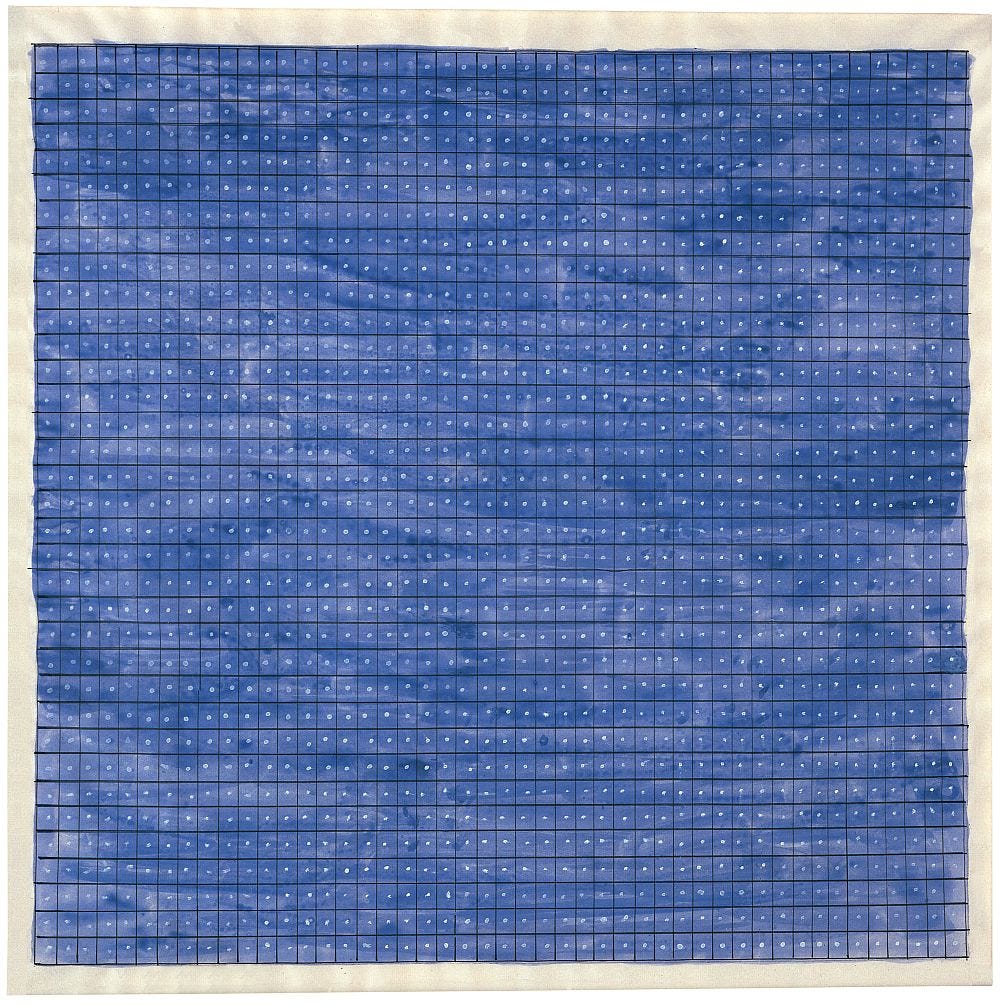
T.S Eliot excelled in his 9-5 at Lloyds Bank in London as a transaction clerk while working on his magnum opus of a poem, The Waste Land. Herman Melville used to inspect ship cargo and the long barges coming into the Manhattan Harbor. Anton Chekhov called “medicine his lawful wife,” and literature “his mistress.” The American abstract artist Agnes Martin had a long laundry list of odd jobs: including “on a farm, miking” and “in a parking garage” and “as a dishwasher, three times.”
Mason Currey recently shared a handwritten list of every job Martin ever had:
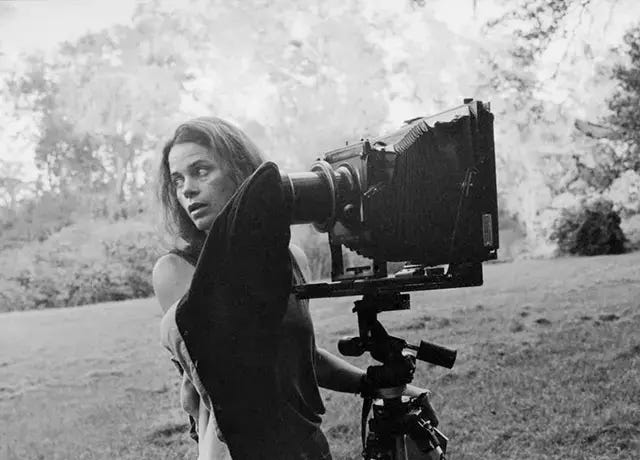
People make art everywhere, the celebrated photographer Sally Mann wrote in her recent memoir Art Work.
They have made it (art) in caves and the side of subway cars and hunched over a prison cot. They do it when they are exhausted, discouraged. They make it from moments cobbled together.
Despite all the distractions and despair art gets made because it “has to. It is you who has to make it.”
Salvation lays in extreme and doomed commitments
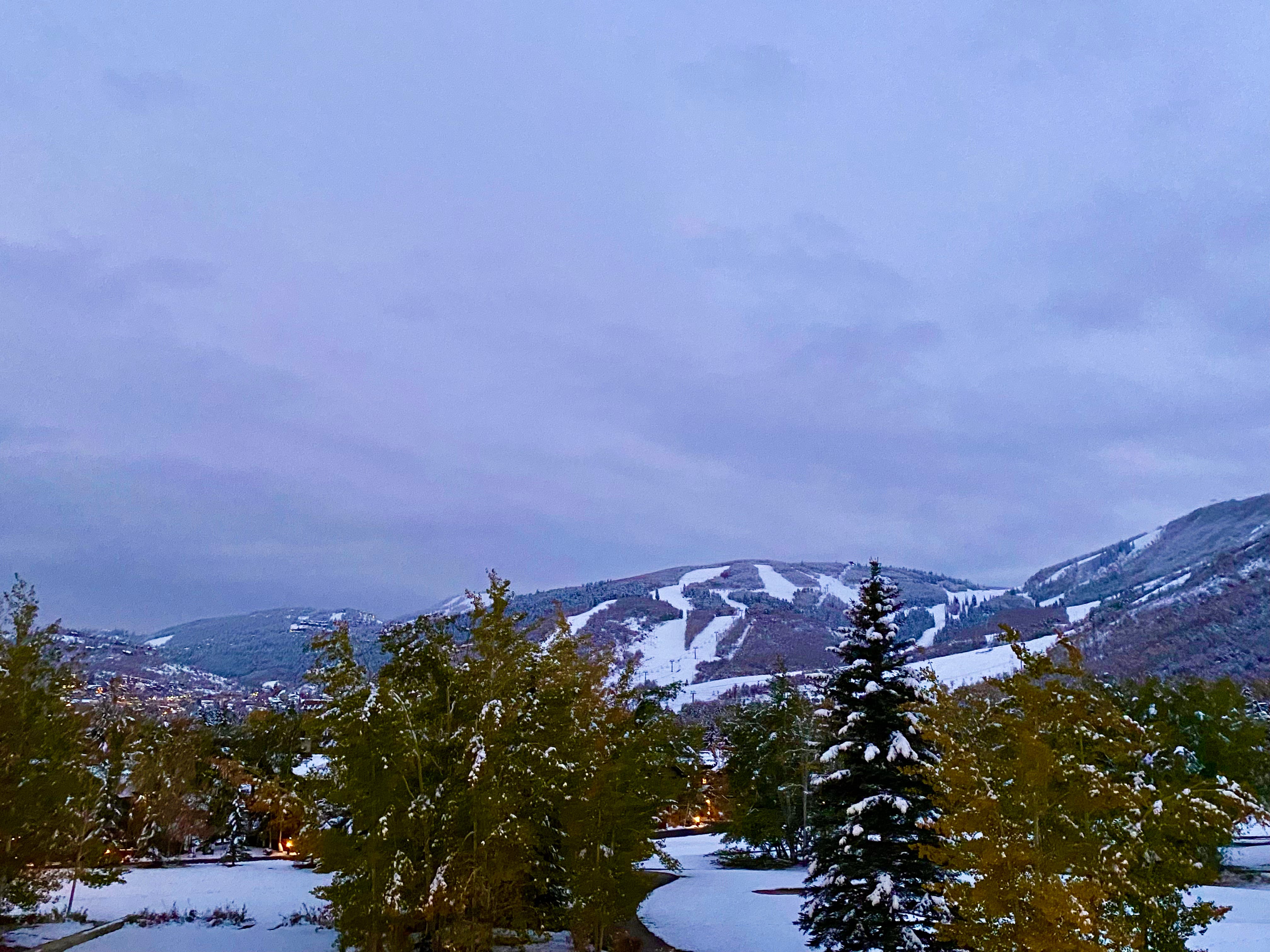
When I started writing on Substack my full time job was extremely demanding. I was frequently pulling 70-80 hour weeks, largely because of intense client-facing travel. I’d write in pockets on the plane to Atlanta, on the road to Logan, Utah and its snow tipped red mountains, on the Golden Mile stretch in Chicago, winging in and out of Heathrow in London.
Plane rides and hotel bars were my favorite vacuums. There was a profound, gorgeous, emptiness that accompanied both spaces. In the plane, the whir of filtered air and the lights dim. At the bar, I’d sit the corner booth, where I’d order a burger or a salad with hot chips on the side. I’d sit and open up my laptop and write.
Since then, I have written over 100 pieces. Still working full-time. I write in the early mornings, evenings and weekends.
To paraphrase Joan Didion, Salvation lays in extreme and doomed commitments. I’ve always related deeply to her romantic ethic. For a while writing was a sort of long-haul dread. A seasickness that wouldn’t abate even when I reached land. And an intense longing all mixed up with the queasiness, because I wanted more. Or desired more from myself than my capacity. Insert Ira Glass’ taste gap, and such. There is an inevitable a trade-off between craft quality and time spent honing it.
It is comforting that some of my favorite authors and writers don’t fit into the tidy maxim of ‘full time writer’ or journalist or essayist. What they all had in common, instead, was a commitment to writing as a function of discovery. In particular, conveying what it was like to live there and then, in a particular place and moment in time.
Your writing practice “co-evolves with how you enter the world”
What does it mean to be a writer when it is not your primary professional identity?
I greatly enjoyed Michael Nielsen’s essay 'developing creative identity’ where he explores, compellingly, that “writer” need not be a primary identity at all, but a medium that underpins and supports many others.
Through tracing different writers’ works, he examines how different writers expand sense-making of the world and give us" “powerful new context to think in,” but to various different ends. Sometimes writing is a medium of thought and communication in service of a fundamental discovery or line of questioning. Other times, as in fiction or storytelling, the point of writing is to create an entire mythical world and giving us an experience of being.
Nielsen contrasts Charles Darwin’s Origin of Species — a sweeping and dizzying journey through detailed observations from Darwin’s network of naturalists, best framed as an argument of evolution through natural selection — with Stewart Brand’s How Buildings Learn, which used photo journalism, field reporting, architectural criticism, travel writing, to interrogate how buildings change over time, and arrive at a viewpoint different from that of the traditional community of architects.
Even though both are ‘writing to discover’, Nielsen observes, they’re doing it in different ways.
Darwin only decided to write the Origin after he'd already understood the principle of evolution by natural selection…Darwin is sharpening and developing an idea he already believes; he also, en route, discovers many surprising implications and applications.
By contrast, Brand seems to have begun with a question, and discovered the basic shape of his answer through the writing process. Brand is a sailor, setting out on a voyage, determined to tell the highlights of the story, no matter what happens.
So: you have this incredible freedom to decide what kind of writing best serves you. You can approach it from a place of amateur delight and curiosity, or from a place of expertise and argument. There are no hard and fast rules!
When you free yourself from what Nielsen calls the “tyranny of ‘writing as a primary identity,” you can be free to choose for yourself what kind of writing you want to do in service of your other, multiple identities: be it a scientist, or researcher, investor, designer, founder.
Paradoxically, the non-writing activities stemming from these identities can actually be wildly generative source material for the writing as well.
What activities will generate the types of understanding you seek? How can you deepen those activities as you write, a loop in which your writing practice co-evolves with how you enter the world, to generate more and deeper insight?
By the end of the piece, he comes to a hard won realization:
I’m not a writer. I’m an explorer and researcher who writes.


A writing practice grows out of your unique lens and experiences onto the world. Importantly, I did not name the title of this essay “being creatively productive while working a full time job” because productivity suggests a means to an end - more about word count and less about intentionally choosing a particular arrangement of words that can uniquely deliver a kernel of truth and beauty to the reader’s heart and mind.
Instead, I chose the words “sustaining creative aliveness” because creative aliveness is the process of discovery, collection, synthesis, and then finally expression. Rebecca Solnit calls this necessary legwork for establishing cosmology of self. Where underneath the task of writing a particular piece is the more general one of “making a self who can make the work you’re meant to.”
If we view our jobs and the hours we spend most of our waking lives as complete diversions from a rich intellectual or creative life, it will never feel fulfilling or meaningful to make creative work.
Framed differently, our full time jobs can extend our creative work beyond the boundaries of itself, and create a beautiful amalgamation of earned wisdom across disciplines that only you can access and endeavor upon. This doesn’t mean it comes easy, or is without tradeoffs — most notably time and emotional investment.
I enjoy the work I do with early stage software because it’s all about telling ambitious stories of technology. Failure, reconstruction, and where fantasy confronts reality (markets), whilst casting a romantic hope for the future. I use software-shaped metaphors often, picked up from meetings on product and engineering. A nurse or physician who moonlights as a novelist, for example, might realize a deep grasp of human experience witnessed in the ward — a lens into life and mortality — can be channelled it into characters. All these seemingly discrete experiences actually make up a unique frame and diction that enable you to make the creative work that you are meant to.
a fun collection of writing practices + some more tactical tips on cultivating spaciousness.
Here are some notes on creative processes of different artists. These are mostly for fun. To end, I’ll share a few more tactical tips on energy management for writing and creative work.
Isak Dinesen: “I write a little every day, without hope and without despair.”
I awake at 5:30, work until 8:00, eat breakfast at home, work until 10:00, walk a few blocks into town, do errands, go to the nearby municipal swimming pool, which I have all to myself, and swim for half an hour, return home at 11:45, read the mail, eat lunch at noon. In the afternoon I do schoolwork, either teach or prepare.
When I get home from school at about 5:30, I numb my twanging intellect with several belts of Scotch and water ($5.00/fifth at the State Liquor store, the only liquor store in town. There are loads of bars, though.), cook supper, read and listen to jazz (lots of good music on the radio here), slip off to sleep at ten. I do pushups and sit ups all the time, and feel as though I am getting lean and sinewy, but maybe not.
MORNINGS:
If groggy, type notes and allocate, as stimulus.If in fine fettle, write.
AFTERNOONS:
Work of section in hand, following plan of section scrupulously. No intrusions, no diversions. Write to finish one section at a time, for good and all.
EVENINGS:
See friends. Read in cafés.
Explore unfamiliar sections — on foot if wet, on bicycle if dry.
Write, if in mood, but only on Minor program.
Paint if empty or tired.
Make Notes. Make Charts, Plans. Make corrections of MS.
Note: Allow sufficient time during daylight to make an occasional visit to museums or an occasional sketch or an occasional bike ride. Sketch in cafés and trains and streets. Cut the movies! Library for references once a week.
When I’m in writing mode for a novel, I get up at 4:00 am and work for five to six hours. In the afternoon, I run for 10km or swim for 1500m (or do both), then I read a bit and listen to some music. I go to bed at 9:00 pm. I keep to this routine every day without variation. The repetition itself becomes the important thing; it’s a form of mesmerism. I mesmerize myself to reach a deeper state of mind.
+ Some actual thoughts on carving out time to write:
tactical advice for busy creatives
Energy management > time management. I write best in the very early mornings, so on writing days it’s usually 6:30/7-8am and I’ll go straight to the work office after. It compartmentalizes writing so I get uninterrupted time to think and write in peace.
A question to ask yourself: when do you feel most ‘alert’ or sharp? That’s probably when you should allot writing time. Repetition is mesmerism, as Murakami said, so find regular moments you can schedule in.
Ask for help and accountability frequently and importantly: ego-lessly. Some of my best pieces were written under watchful eye of my best friend (and co-writer of a previous newsletter) Justine. When we wrote together and set deadlines, we were writing a collaborative piece every 2 weeks. I now send half-baked pieces to friends whose eyes and taste I trust — it gets you to a better, more beautiful piece quicker, even if you have to take an ego-bruising (or battering) to get there.
Find odd personal hacks to fit reading and writing into a busy schedule. If you don’t already use some type of voice dictation app, I find Wispr Flow to Notion extremely useful — you can find me strolling articulating thoughts or ideas for pieces out loud. Sometimes I ask friends if we can use Granola to record our conversations and riff on ideas together. (Is this weird? Maybe.) Another strange fact is I read a lot of books on the Kindle while walking on the treadmill or cycling slowly on a stationary exercise bike. A friend of mine says she always takes the longest bus ride to her destination instead of the train because she reads better on buses. Another listens to audiobooks at the gym (instead of music… it’s appalling). Not suggestions, just find weird hacks that work for you.
 Nix 🕊@startingfromnixThis is not an ad, but since I downloaded @WisprFlow I’ve been on a roll articulating “notes to myself”:
 10:36 PM · Mar 19, 2026 · 557 Views2 Replies · 1 Repost · 11 Likes
Introduce writing variety through scoped projects. This is very relevant as I have a new writing project coming out (very soon) that is arguably a synthesis of work and creative writing on founder and company stories. Constantly try and launch new projects that allow you to push to the edge of your ability. It should make you uncomfortable and a few will fail. That’s fine!
Don’t covet. Give everything. Give it all. One of my favorite books on the topic is Annie Dillard’s A Writing Life, where she writes “Anything you do not give freely and abundantly becomes lost to you. You open your safe and find ashes.” Creatives tend to hoard notes and lines thinking they’ll be used perfectly once at some point in the future. But writing is a deep well that continues to be refilled by life experience and reading and observations. Use every good sentence you have ever written now. Burn the candles.
Invest in the richness of fiction, even if no obvious or legible ‘ROI’ (return on investment). There’s a rampant ChatGPT-ification of knowledge acquisition where we ask AI to summarize insights instead of doing the reading ourselves. Actually investing time into reading novels, essays, short stories, and poetry is a competitive advantage. It emerges on a sentence level.
Rigor and discipline applies to creative work too. The common notion of creative work is that it shows up spontaneously and magically. My alternate view is that it’s just a grind that you must learn to love, and it requires the same conscientiousness as any other type of work. Surprisingly, that is very freeing. It means, like anything, you can set up systems and habits - and you don’t have to rely on whimsy or inspiration to strike before you sit down and do creative work.
Show up, and the muse eventually shows up. That is all.

Nicole.
This was so fun and comforting to read. I often get lulled into the trap that my writing has to be monetized/turned into a product, and since it hasn't yet then that must mean it isn't 'good'. I keep reminding myself though I do this because I enjoy it, and the creativity fills me up!
Thoroughly enjoyed reading this. So many notables and quotables, but the bit that particularly stuck out for me was how your non-writing activities can be poured back into your writing.
I am (currently, because things can always change!) a full-time writer-director, but before then jumped around from job to job and it is entirely unsurprising how much those odd jobs unintentionally served as inspiration to some of the stories I've gone on to create. Some of those jobs are nearing a decade since I last did them, yet they remain the gift that keeps giving.
As a whole, you have to live to write; that's where the stories come from.
Thank you for this piece! Shared with many writer and artist/creative friends.